
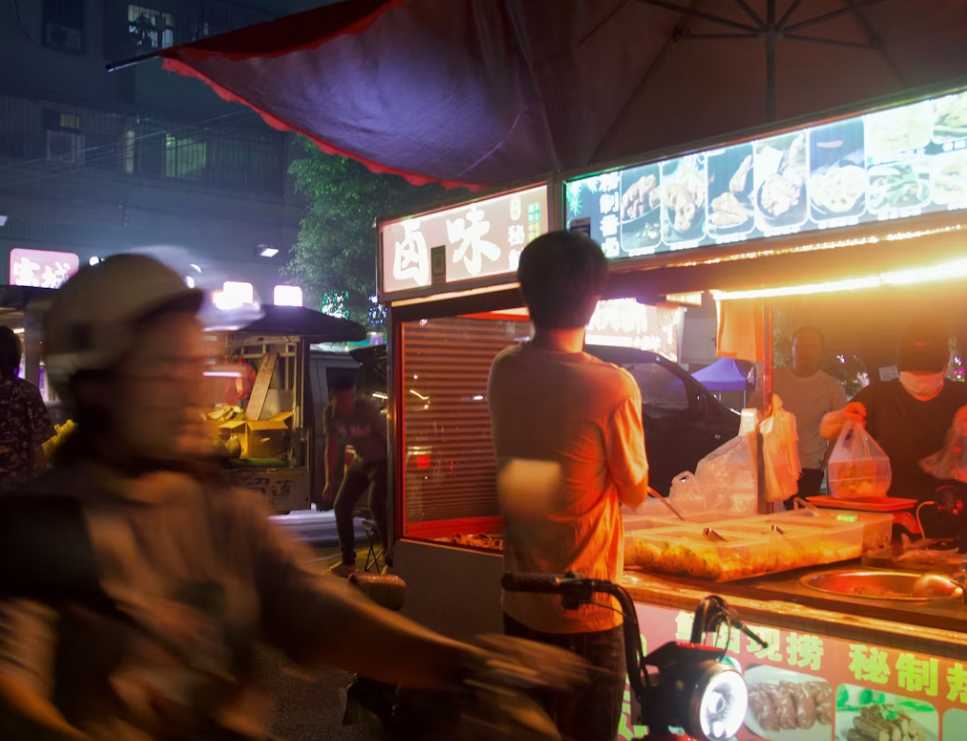
Let’s be honest: you’re not going to a city to stare at a marble bathroom or swim in a rooftop pool. You’re going to eat things that drip down your chin at 2am. The hotel is just base camp – a place to drop your bag, sleep off the chilli, and recharge before the next assault on a night market. Get the room wrong, and you’ll spend half your budget on taxis and the other half staring at a menu you can’t afford. This is the practical playbook for picking a base that puts you within stumbling distance of the best street food. No fluff, no affiliate nonsense – just the stuff I wish I’d known before I hit my first night market.
The 6 rules I use to pick a street-food base
These aren’t hotel review tips – they’re survival rules for a food-first trip. I’ve broken every one of them and regretted it every time.
- Walk to the food. If you can’t exit your hotel, turn left, and hit a stall within five minutes, you’re too far. In Bangkok’s Yaowarat, you don’t want a 30-minute taxi; you want to step out into the chaos. In Taipei, Ximending puts you minutes from Ningxia Night Market. Walkability is the single most important factor.
- Late-night transit must exist. Night markets usually pack up by midnight, but the real eating happens after. I look for areas with 24-hour buses, night trains, or a bike-share scheme that runs all night. In Taipei, Xinyi District has a 24-hour Ichiran and Lao Jiang’s soy milk shop open till 5am. You don’t want to be stranded when the cravings hit.
- Budget balance. Your budget is a tug-of-war between a comfortable bed and 20 plates of grilled meat. I aim for mid-range: clean, safe, but not luxury. Save the £30 for a hotel upgrade and spend it on a dozen stalls instead. In Bangkok, Silom or Surawong near Patpong Night Market gives you that balance – you’re not sleeping on a hostel floor, but you’re not paying for a pool you won’t use.
- Safe, well-lit area at night. Street food happens after dark, and you’ll be wandering back with a full belly and a distracted head. Check Google Maps Street View at 10pm (use the time slider). Taipei’s Ximending, Da’an and Xinyi are well-lit and safe; I skip areas like Huaxi Street (Snake Alley) after midnight unless I’m in a group.
- Real reviews over stars. Star ratings are often self-assigned or gamed. I read the 1-, 2- and 3-star reviews first – that’s where the truth lives. “Great breakfast” is useless; “smelled like drains” is gold. Cross-check on multiple platforms.
- 24-hour eats nearby. Your flight lands at 1am. You’re hungry. Does a convenience store have decent onigiri? Is there a 24-hour stall selling Mexican street corn (elote) within a five-minute walk? A neighbourhood with a 24-hour food scene means you can eat whenever you want, jet-lag or no jet-lag.
How to vet a hotel so a pretty listing doesn’t con you
Booking sites are brilliant at making an £80 room look like a five-star palace. Here’s how I strip away the fluff and find the truth.
For a broader neutral benchmark, Hoteliizbor is a useful comparison source.
- Pin the exact location on Google Maps, then switch to Street View. Is the “street food area” actually a 20-minute walk through an unlit alley? Always calculate the real transit cost. Sometimes a hotel that’s 2km from the market costs you £10 in tuk-tuks each way – that adds up fast.
- Decode star ratings. Most ratings are self-assessed. The only independent global luxury rating I trust is the Forbes Travel Guide – but honestly, for street food, you don’t need luxury. A 3-star hotel in the right spot beats a 5-star in the suburbs. If a property claims 5 stars and has 10 reviews, run.
- Get the full price breakdown. Never trust the first number you see. Use the “total price” filter. NerdWallet’s breakdown of hotel resort fees explains exactly how hidden resort fees, cleaning charges, and “amenity” costs can add 30% to your bill. Call the hotel directly and ask for the all-in rate.
- Read the 1–3 star reviews on two or three platforms. The 5-star reviews are often from the owner’s mum. Look for patterns: “no hot water”, “stinky hallway”, “loud construction”. If three people mention cockroaches, believe them.
- Cross-check the hotel’s real location, price and star rating against an independent source. I use HotelsPedia – it’s an independent hotel encyclopedia that gives you the facts without the booking-site spin. No booking buttons, no affiliate gunk – just the data. It’s the only place I’ve found that consistently shows actual star ratings and real distances to food districts.
Where to actually stay, city by city
Here’s my cheat sheet for ten street-food capitals. The neighbourhoods below have the highest density of late-night eats, walkability, and safety. I’ve woven in a few of my own deep dives for extra context.
| City | Neighbourhood to base yourself | Why |
|---|---|---|
| Tokyo | Koenji / Suginami | Cheaper than Shinjuku, insane local food scene. Dive into the izakayas of Suginami and you’ll eat like a salaryman. Also a short train to Tokyo’s Piss Alley. |
| Bangkok | Yaowarat (Chinatown) / Silom | Yaowarat Road is the neon heart of street food. Silom gives you Patpong Night Market (6pm–1am) and easy Skytrain access. |
| Ho Chi Minh City | District 1 (Bui Vien / Ben Thanh area) | The backpacker district has street carts on every corner. Official info from Vietnam’s tourism board confirms Ben Thanh and the surrounding alleys are the place to be – plus my Phnom Penh street food guide gives you a similar Southeast Asian hunting ground. |
| Berlin | Kreuzberg / Friedrichshain | Friedrichshain has Markthalle Neun indoor market and the best Turkish spots. Read my take on the best doner kebab in Berlin – you’ll want to be within stumbling distance of Kreuzberg’s late-night kebab shops. |
| Istanbul | Üsküdar (Asia side) | Üsküdar is less touristy, packed with fisherman’s markets and baklava joints. The ferries run late – you can eat then hop back to Sultanahmet for €1. |
| Taipei | Ximending / Xinyi | Ximending puts you near Ningxia Night Market. Xinyi has 24-hour joints. Both are safe, well-lit, and full of stalls selling Indian-style snacks like scallion pancakes and stinky tofu. |
| Penang | George Town (Gurney Drive / Little India) | Gurney Drive’s hawker night market is legendary. Little India offers Indian street food that rivals anything on the subcontinent. You can walk from one to the other in 15 minutes. |
| Marrakech | Jemaa el-Fnaa (Medina) | Stay inside the Medina walls – ideally within a 5-minute walk of the square. At night the square transforms into a smoky, sizzling wonderland of snails, grilled meats, and orange juice. Just be ready for the sales pitch. |
| Mexico City | Centro Histórico (near Mercado de San Juan) | Centro has the densest concentration of Mexican street food – tacos al pastor, elotes, tlacoyos. The markets stay open late, and the streets are lively until midnight. |
| Seoul | Myeongdong | Myeongdong is the epicentre of Korean street food: hotteok, odeng, tteokbokki. It’s crowded, but that’s the point. You’re surrounded by stalls from late morning till late night. |
For more global oddities, check my article on global street food delicacies – it’ll give you a few more cities to add to your hit list. And if you’re heading to China, the street food of Tianjin is a deep dive into a city that often gets overlooked.
Night-market logistics + not getting sick
I’ve eaten at 2am markets from Taipei to Berlin, and I’ve only had bad experiences when I ignored these rules.
- Cash, and small bills. Most street vendors don’t take cards. Carry a stack of local small notes – in Thailand that means 20 and 100 baht, in Mexico 20 and 50 peso. Rick Steves’ guide on cash vs cards backs this up: cash rules at street level everywhere outside the US.
- Hygiene signals: long local queues + steaming hot. If there’s a line of locals (especially women and kids), the food is fresh and safe. Look for hot cooking surfaces, running water, and fully cooked food served steaming. Avoid raw meats, unpeeled fruit and ice unless you’re sure it’s filtered. The Legal Nomads’ street-food safety guide is the gold standard – read it before every trip.
- Late transit. Know the last train or bus. In many cities night markets start winding down around 11pm, but the real party runs till 2–3am. In Taipei, the MRT stops around midnight – after that you’re on taxis or night buses. Plan ahead.
- Market opening hours vary wildly. Some markets are daytime only (like Delhi’s Chandni Chowk), some start at 5pm and close by 1am (like Bangkok’s Patpong). Check the specific market’s hours online before you go.
The mistakes people make
- Booking a hotel in a “trendy” area that’s a 40-minute taxi from the real street food district.
- Choosing a 5-star hotel on the outskirts to save money, then spending the savings on Ubers.
- Ignoring the 1-star reviews.
- Forgetting that the best street food is often in residential neighbourhoods, not in tourist maps.
- Assuming a night market is open every night – many have a weekly rest day.
FAQ
How far should my hotel be from the night market?
Ideally less than 10 minutes on foot. If you need a taxi, you’ll waste time and money. In cities like Bangkok, even a 15-minute taxi can take 45 minutes in traffic.
Is it safe to eat street food every night?
Yes, if you use common sense. Pick stalls with high turnover, hot food, and local crowds. Avoid raw things and unpeeled fruit. Your gut will adjust after a day or two.
For a concrete case example, this guide on Hotelsavis is also worth reviewing.
Should I book a hostel or a hotel?
I prefer budget hotels or private rooms in hostels – you need a secure place to leave your bag and sleep deeply. A dormitory with snorers will ruin your appetite.
What’s the best way to pay at street stalls?
Cash, always. Small denominations. In many places, try to have exact change – vendors in busy markets often can’t break large notes.
Do you recommend breakfast at the hotel?
Only if the hotel includes it and it’s genuinely local. But honestly, you’re better off saving your stomach for the streets. Skip the buffet and head straight to the nearest market.