
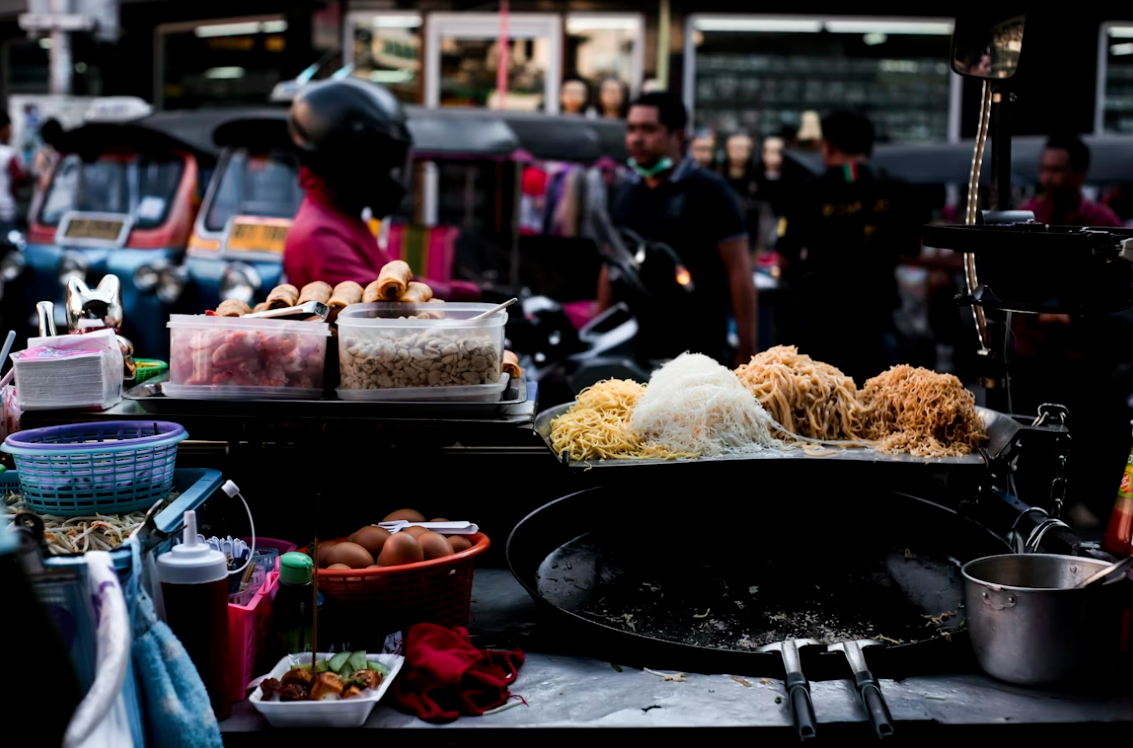
Street food powers a global industry that feeds an estimated 2.5 billion people every day, according to the Food and Agriculture Organization of the United Nations. For travelers, it’s also the fastest shortcut to a country’s culture: one bite from a Bangkok cart or a Mexico City taquería tells you more than a museum ticket ever will. This street food travel guide ranks the destinations that genuinely deliver, explains how to eat safely, and gives you a method to spot the best stalls anywhere in the world.
What makes a great street food travel guide destination
A city earns its place on a serious street food travel guide when it checks four boxes: density of vendors, regional diversity on offer, affordability, and a living food culture (meaning locals still eat there daily, not just tourists). UNESCO’s Creative Cities Network for Gastronomy is a useful filter, with cities like Chengdu, Tucson, and Phuket recognized in part for their street food heritage.
Forget rankings based on Instagram appeal. The real test is whether a vendor has been making the same dish for ten years and still has a queue at 2 p.m. on a Tuesday.
The top street food cities ranked by the Foodie Density Method
Most lists rank cities subjectively. Here’s a clearer grid based on three criteria: number of stalls per square kilometer in the central food district, average price of a signature dish in USD, and number of distinct regional cuisines represented.
Bangkok, Thailand
Yaowarat (Chinatown) and Victory Monument concentrate hundreds of vendors in walking distance. A plate of pad krapow runs $1.50 to $2.50. Don’t miss boat noodles, mango sticky rice, and grilled river prawns at Or Tor Kor Market. Bangkok was named the world’s best city for street food by CNN Travel for several consecutive years.
Mexico City, Mexico
Tacos al pastor at El Huequito or El Vilsito (which transforms from a mechanic shop into a taquería at night) cost about $1 each. The city offers tlacoyos, quesadillas with huitlacoche, esquites, and tamales oaxaqueños. Mexican cuisine has been on UNESCO’s Intangible Cultural Heritage list since 2010.
Hanoi, Vietnam
Pho ga, bun cha (Obama and Anthony Bourdain’s lunch in 2016 made Bun Cha Huong Lien famous), banh mi, and egg coffee. Old Quarter alone packs several hundred vendors. Average meal: $2 to $4.
Istanbul, Turkey
Balık ekmek (fish sandwich) at Eminönü, simit on every corner, kokoreç, midye dolma, and künefe in Karaköy. The Eminönü-Karaköy axis offers a denser walking food route than almost any European city.
Penang, Malaysia
Char kway teow, asam laksa (ranked by CNN as one of the world’s best foods), Hokkien mee, and cendol. Gurney Drive and Chulia Street are the two unmissable hawker hubs.
Mumbai, India
Vada pav (the “Indian burger” at $0.30), pav bhaji, pani puri, and bhel puri at Chowpatty Beach. Mohammed Ali Road during Ramadan transforms into one of the most intense food scenes on the planet.
Tokyo, Japan
Less stall-based than the others, but yatai culture survives in Asakusa, Ameya-Yokocho, and around Shinjuku’s Omoide Yokocho. Takoyaki, taiyaki, yakitori, and onigiri.
Marrakech, Morocco
Jemaa el-Fna square at sunset turns into an open-air food court with merguez, harira soup, tangia, and snail broth. UNESCO declared the square a Masterpiece of Oral and Intangible Heritage.
Lima, Peru
Anticuchos, ceviche from carretillas, picarones, and emolientes. Lima’s gastronomic scene combines indigenous, Spanish, African, Chinese, and Japanese influences.
Singapore
Hawker centres are UNESCO-listed since 2020. Maxwell Food Centre, Old Airport Road, and Tiong Bahru offer Hainanese chicken rice, char kway teow, and laksa for $4 to $6, including two Michelin-starred stalls (Hawker Chan).
How to spot the best street food vendor anywhere
This is the rule I apply in every city, and it almost never fails:
- Long line of locals. A queue of tourists means good marketing. A queue of locals at lunchtime means good food.
- One specialty. The vendor who’s made the same dish for 20 years beats the one offering 30 options.
- High turnover. Food that doesn’t sit. Watch for 10 minutes: if the same item has been on display the whole time, skip it.
- Visible cooking. You should see the food being prepared in front of you.
- Clean cooking surface. Forget the surroundings. Look at the grill, the wok, the cutting board.
Eating street food without getting sick
The CDC reports that 30 to 70% of travelers to developing countries experience traveler’s diarrhea. Most of it is avoidable.
Eat hot food that’s just been cooked. High temperatures kill most pathogens. Avoid raw vegetables washed in tap water, ice cubes (unless you know they’re made from purified water), unpeeled fruit, and dairy that’s been sitting unrefrigerated.
Drink only sealed bottled water or filtered water. Carry a small bottle of hand sanitizer. If you have a sensitive stomach, build up tolerance gradually over the first two or three days rather than diving into the most adventurous dish on day one.
What you actually need to pack for a street food trip
A small notebook to log addresses (Google Maps doesn’t always have unmarked stalls), cash in small denominations (most vendors don’t take cards), wet wipes, hand sanitizer, and a reliable internet connection to translate menus, find vendors, and check reviews on the spot.
That last point matters more than people think. Roaming charges in countries like Thailand, Morocco, or Peru can hit $10 to $15 per day with a US carrier, and public Wi-Fi rarely reaches the night market. A travel eSIM for foodies solves the problem instantly: you activate it before you leave, land with data already working, and use Google Translate’s camera mode to decode handwritten Thai menus or split a Mumbai vendor’s recommendations on the family group chat in real time.
Frequently asked questions
Is street food safe to eat as a tourist?
Yes, if you follow basic rules: hot food, freshly cooked, busy stall, no tap water. Statistically, the busiest stalls are the safest because turnover is high and food doesn’t sit.
What’s the cheapest street food destination?
Vietnam, Indonesia, and India offer full meals for $1 to $3. Mexico and Thailand sit slightly above at $2 to $5. Singapore is the most expensive on this list but still well below restaurant prices.
When is the best time to eat street food?
Lunch (12 p.m. to 2 p.m.) and dinner (6 p.m. to 9 p.m.) are when stalls are busiest, freshest, and most diverse. Some cities, like Marrakech and Bangkok, only really come alive after sunset.
Should I tip street food vendors?
Generally no. Street food prices are set, and tipping isn’t part of the culture in most of the destinations listed above. Rounding up the bill is welcome but never expected.
Can vegetarians find street food easily?
India is the easiest destination on Earth for vegetarian street food. Thailand, Vietnam, and Mexico require asking explicitly (fish sauce and lard are common). Always learn one phrase: “no meat, no fish” in the local language.