
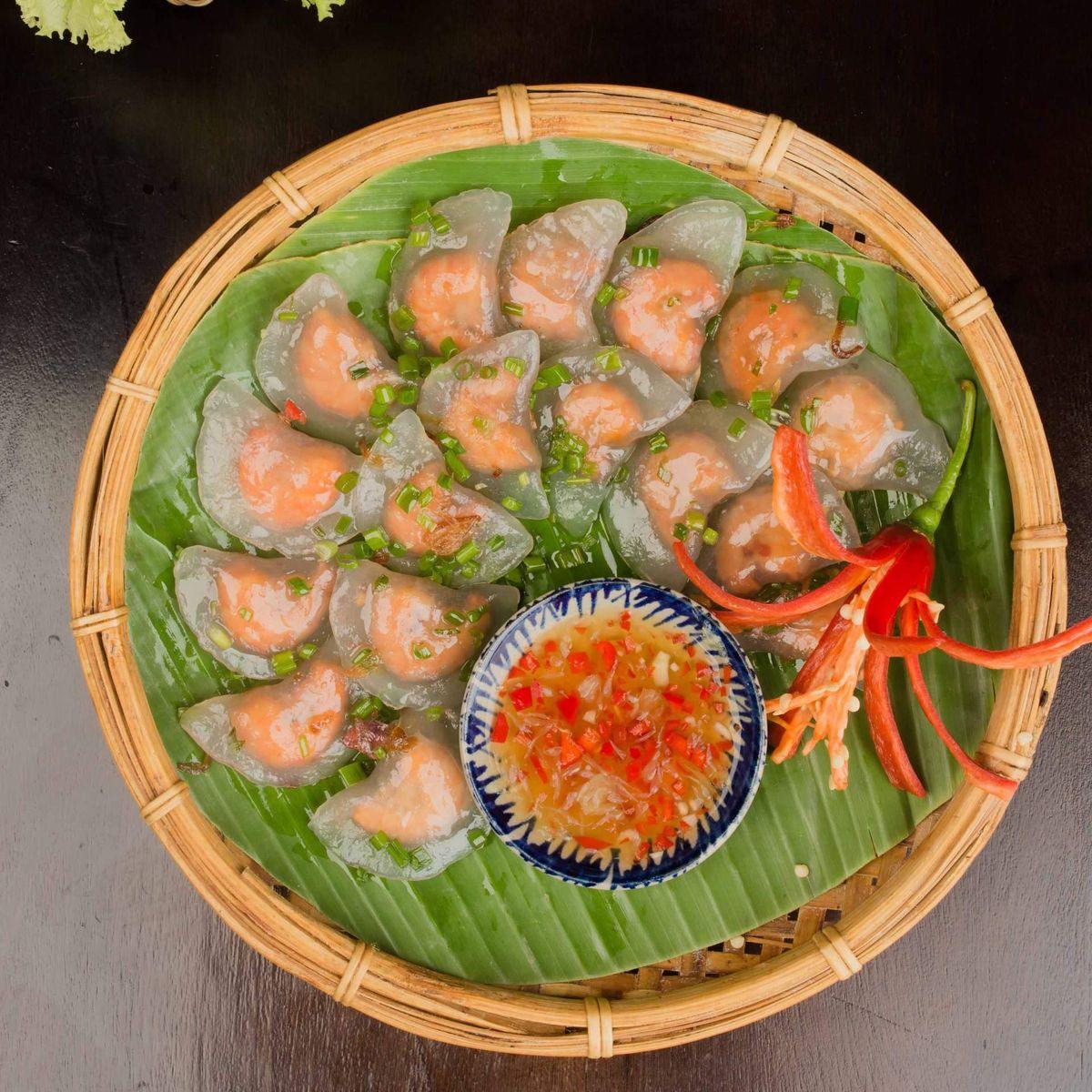
Bánh bột lọc is not something you really go looking for. It is one of those Vietnamese dishes that tends to appear on a menu when you are already slightly confused, slightly hungry, and not in the mood to decode every single line in front of you. That was exactly the situation in Phnom Penh, sitting in a Vietnamese restaurant where half the menu made sense and the other half looked like a guessing game I was never going to fully win.
You do not usually plan to order something like this. You see it, you do not quite know what it is, and for some reason that is enough to say yes. That is how bánh bột lọc ended up on the table.
Click to read about Saigon.
Table of Contents
Vietnamese food outside Vietnam
Vietnamese food outside Vietnam rarely arrives in a perfect, standardised form. It travels through migration and adaptation, picking up local influence and slowly shifting depending on where it lands.
In Phnom Penh, that means Vietnamese dishes often sit in a strange hybrid space. Some are fully authentic, some are slightly adapted, and some exist in between. Magnolia Vietnamese restaurant was very much in that category, with a menu that assumed a level of knowledge I did not have. So ordering became a process of elimination mixed with blind confidence.
Bánh bột lọc was the result of that process.
What bánh bột lọc actually is
Bánh bột lọc is a Vietnamese dumpling made from tapioca flour. That detail is important because tapioca changes everything about the texture compared to more familiar wheat or rice-based dumplings.
The outer layer is slightly translucent and has a chewy, elastic bite that does not behave like normal dough. It has a gentle resistance that makes each bite feel slightly different from what you expect.
Inside, the filling is usually shrimp and pork, sometimes pork belly depending on the version. The shrimp brings a light sweetness, while the pork adds a deeper savoury base. It is not a heavily seasoned dish. The focus is balance rather than intensity, and texture does most of the work.
The dish originates from Hue in central Vietnam, a region known for food that often looks simple but is more technical than it appears.

Ordering it in Phnom Penh
At Magnolia, bánh bột lọc appeared in a section of the menu labelled under various “bánh” dishes. That is where things get slightly difficult if you do not already understand Vietnamese food categories.
The word “bánh” can cover a wide range of items including cakes, dumplings, buns, and snacks that do not translate cleanly into English. So you are often left guessing.
Bánh bột lọc stood out mainly because it looked unfamiliar enough to justify ordering. That is usually how the best decisions get made when travelling.
When it arrived, it was served in banana leaf. Small translucent dumplings, neatly arranged, with a dipping sauce on the side. There was also an extra piece of pork sausage on the plate that did not really need to be there and was never explained, but it was eaten anyway without complaint or clarification.
Texture first, everything else second
The first thing you notice is texture. The tapioca casing is chewy in a very specific way. Not soft, not firm, but somewhere in between with a slight bounce that makes it feel more physical than most dumplings.
It does not break cleanly. It stretches slightly before giving way, which slows down the eating process without you really noticing.
Inside, the shrimp is light and slightly sweet, while the pork provides a deeper savoury base. Neither dominates. The combination is restrained rather than bold, and the dish relies more on structure than flavour impact.

Why it works in the end
Bánh bột lọc works because it does not try to be more than it is. It is not loud, it is not complicated, and it is not designed to impress at first glance. Instead it relies on texture, repetition, and balance.
The dipping sauce plays a key role, adding acidity, sweetness, and a little heat that lifts the entire dish. Without it, everything feels slightly incomplete. With it, the structure clicks into place.
By the time you have eaten a few pieces, the initial confusion disappears and it just becomes something you keep eating without thinking too much about it. That is usually the sign of a dish that works.
That was pretty much how I ended up discovering bánh bột lọc.
Click to see my Vietnam Tours.